In the beginning: April 2025
Ms. M's child was 7 years old, in first grade, with ADHD. Things were not easy for him: first, his sleep was very poor — he would often wake at a fixed time, around one or two in the morning. Second, he couldn't sit still in class and didn't pay much attention; he used to leave his seat as well. Homework was also difficult — out of a four-page worksheet, he might only manage two or three questions. Emotionally, he cried easily and got worked up easily; although he could be soothed, having this happen every day wore the family down too. His speech was somewhat disorganized — when he wanted to say something, he had trouble getting it out clearly.

The family took him to Shanghai, where the doctor suggested trying a combination of Chienomoto No. 2 and No. 3 — No. 3 in the morning and No. 2 at night. His mother placed the order mostly to give it a try. She didn't expect that, a month later, she'd be in for a big, happy surprise.
One month later: May 2025
A screenshot of her review after one month:


Over a year later: July 2026
A screenshot of her review after fourteen months:

Below, let's look at a few specific changes in more detail.
01 Sleep: from a "super light, restless sleeper" to "sleeping straight through the night"
Before: a "super light, restless sleeper." "He never slept through a whole night before age two — he cried every night. After age three, he'd wake at a fixed time every single night."

By age 7, the night-waking problem was still obvious — he often woke at a fixed time, around one or two in the morning, sometimes to use the bathroom, sometimes to tell his mother he'd had a dream. One month after starting Chienomoto: he slept much more soundly and could basically sleep straight through the night. Another surprise that came with better sleep: he grew one centimeter taller in that one month.
02 Emotions: from "crying easily and getting worked up" to "much less resistance"
Before: he cried easily, got worked up easily, and would throw tantrums when he didn't get his way. Now: there's much less resistance, and he listens to reason and calms down fairly quickly. "His mood swings aren't as big anymore, and he cries much less." Not only that — his mother also said, "His appetite is good too."
03 Attention and homework: from "only able to do two or three questions" to "finishing part of his homework on his own"
Before: homework was something his mother dreaded — out of a four-page worksheet, he'd only do two or three questions. Now: he's willing to do his in-class assignments, and even his quiz scores have improved. "Now he can finish part of his homework on his own — before, that was simply unthinkable."
04 Language: from "disorganized speech" to "able to fully recount a small event"
Before: when telling a story, his speech tended to come out jumbled. Now: he can describe a small event more completely, and both his speaking and comprehension have improved. Later on: after coming home, he'll also tell the family a bit about what he learned in class.
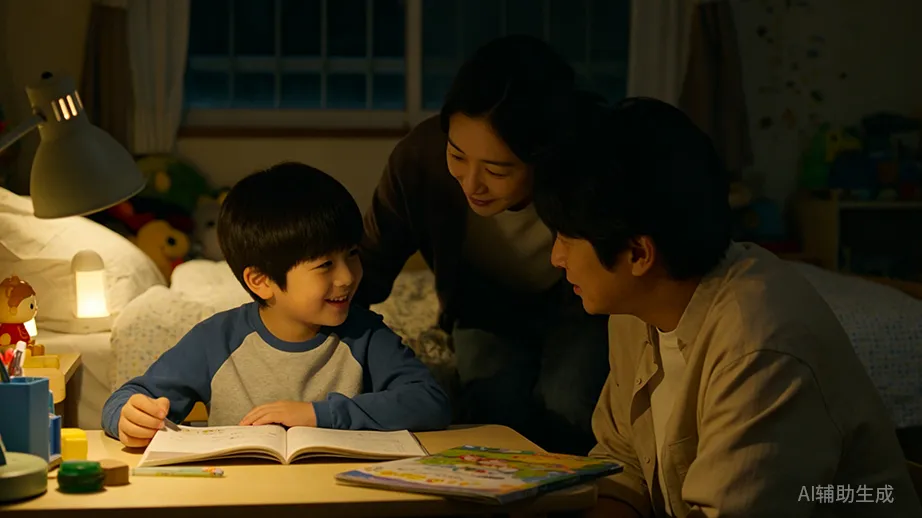
05 Hyperactivity and classroom behavior: from "leaving his seat" to "sitting through an entire lesson"
Before: he couldn't manage in class — he'd leave his seat and not pay much attention. After more than a year on Chienomoto: he can sit calmly through an entire lesson and take in about ten percent of the content. His mother also said his attention span has noticeably lengthened. At the same time, the family's expectations of him have risen compared to before, too.
Summary: over a year of persistence, recognized by his teacher
Over this past year and more, his mother has kept giving him Chienomoto on time and in the right amount, almost never missing a dose, all the while watching closely for changes in him. What comforted her even more was that last semester he brought home two certificates — "Most Improved Student" awards. She said his teacher had seen the change in him too, and that the teacher's objective assessment carried even more weight.