Find Your Fit
Find the scenario that matches your family,
then decide whether to read on
The 10 scenarios below cover what 80% of the families who come here are actually dealing with. See which one sounds like yours before deciding whether to learn more.
 A · School-age families
Trouble focusing, can't sit still, homework drags on until late
Ages 1–14 · ADHD / developmental delay / ASD
How many of these sound like your family?
- The teacher says your child is often distracted in class, with a lot of fidgeting
- Homework that should take an hour stretches past 10pm every night
- Already on a stimulant medication, but dealing with side effects (appetite loss, weight loss, mood swings, worse sleep)
- Don't want to add medication right away — you've tried TCM and behavioral training, with modest results
- Diagnosed with ADHD or ADD, doctor says "let's watch and wait" but you don't feel settled about it
What Chienomoto can do
Ferulic acid and angelica dahurica extract help improve frontal lobe function — nutritional support at the "infrastructure" level behind attention.
In clinical collaborations, it's typically used alongside stimulant medication, aiming for fewer side effects, slightly longer sustained attention, and less mood volatility.
What Chienomoto can't do
It's not medication and cannot replace a professional ADHD evaluation and treatment plan. Diagnosis must come from a child psychiatrist or developmental-behavioral pediatrician.
It's not a one-week fix. Parents typically report changes after 6–12 weeks of consistent use — patience is needed. It also doesn't solve environmental factors.
"My son was diagnosed with ADHD in third grade. His stimulant dose went from 18mg to 36mg, but the side effects meant he lost 4kg and couldn't sleep at night. On our doctor's advice, we added Chienomoto — his sleep recovered by the third month, and by the sixth month his medication dose was reduced back to 18mg. His weight and mood both improved a lot."
※ Important: Diagnosis and treatment of ADHD in children must be handled by a qualified doctor. Don't stop prescribed medication just because you want to try Chienomoto. Discuss any changes to your child's treatment plan with their doctor first.
 B · Teen families
Low mood, doesn't want to go to school, doctor says "mild depression"
Ages 11–17 · Subthreshold depression / early depression / anxiety comorbidity
How many of these sound like your family?
- In the last 1–3 months, they've noticeably withdrawn and lost interest in things they used to enjoy
- Doesn't want to go to school, finds excuses to skip, but has no clear physical illness
- Noticeable changes in sleep and appetite (sleeping too much or too little, overeating or not eating)
- A doctor assessed "subthreshold" or "mild" depression — watching and waiting is an option, medication is too
- Neither you nor your child wants to start antidepressants right away, but you're afraid of waiting too long
What Chienomoto can do
Depression is linked to neuroinflammation, neurotransmitter metabolism, and energy metabolism. The ferulic acid + angelica root extract combination in Chienomoto has shown, in published research, a regulatory effect on mood-related pathways.
In the clinical gray zone of "not yet needing medication," nutritional support is often used as a first step, alongside counseling and family support.
What Chienomoto can't do
It does not replace a professional evaluation. If your child has thoughts of self-harm or suicide, severe insomnia, or hallucinations, seek medical care immediately — don't substitute any supplement for treatment.
Its effect is supportive and gradual, and it shouldn't become a new form of emotional pressure — avoid saying things like "I bought this for you" as leverage.
"My daughter was diagnosed with mild depression in ninth grade; the doctor said we could watch and wait. We combined counseling with Chienomoto. No clear change for the first two months, but by month three she started going out on her own, and by month five she took up badminton. She started high school this year without a single sick day. I can't take credit — she pulled through herself, and Chienomoto was one of the things we did along the way."
※ Important: Teen depression is a serious medical concern. If a doctor recommends medication, please respect that judgment — don't delay treatment because you'd rather "try nutrition first." Chienomoto's proper role is supportive, not a replacement.
 C · Self-care
Light sleep, foggy the next day, can't focus at work
Ages 18–55 · Knowledge workers / parents of young children / midlife fatigue
How many of these sound like you?
- You fall asleep every night, but wake up 1–3 times, and feel exhausted in the morning
- You tried melatonin for a while, worried about dependency or hormonal effects, and stopped
- During the day, your mind feels foggy — you need several cups of coffee just to push through
- Not bad enough to see a doctor, but it's been going on for more than 3 months
- You know sleep matters for brain health and want to do something, but don't want sleeping pills
What Chienomoto can do
Mild chronic sleep issues are commonly linked to reduced mitochondrial function. PQQ is involved in mitochondrial biogenesis and supports cellular energy metabolism, while PS is linked to regulation of the HPA (stress) axis.
Users most commonly report two things: fewer nighttime awakenings and clearer thinking during the day.
What Chienomoto can't do
It's not a sleep aid drug and can't resolve severe insomnia (fewer than 4 hours of sleep a night for 2+ consecutive weeks). See a sleep specialist for that.
It doesn't replace good sleep hygiene. Good sleep starts with a good sleep environment — no phones before bed, no bright lights in the bedroom.
"I'm in my early forties, working in design, chronically light sleep with 2–3 wake-ups a night, foggy by mid-afternoon, running on coffee. I tried melatonin but worried about dependency and stopped. After a bit over two months on Chienomoto, the clearest change wasn't sleeping longer — it was waking up less at night and staying clearer for longer during the day. Not a total transformation, but my work has been noticeably steadier."
※ Important: If your insomnia is a symptom of anxiety, depression, bipolar disorder, hyperthyroidism, or another condition, treat the underlying condition first.
 D · Elder care
A parent's memory keeps declining, diagnosed with cognitive decline, but "nothing to prescribe"
Parents 55+ / adult children caregiving · Early cognitive decline / post-stroke recovery
How many of these sound like your situation?
- Over the past six months to a year, your parent has started repeating the same story
- They've started forgetting to turn off the stove, take medication, or where their keys are
- Subtle personality changes: quieter than before, or more easily irritated
- A checkup or doctor's assessment suggests MCI (mild cognitive impairment) or early-stage dementia
- The doctor said "there's no specific drug for this right now, try cognitive training" — but you're not sure how
- Your parent has a history of stroke, with accompanying low mood or apathy
What Chienomoto can do
For elders with MCI, early Alzheimer's, or post-stroke cognitive decline, the goal isn't "making mom as sharp as before" — it's slowing decline and preserving daily function.
The changes families report most: less repetitive speech, quicker responses, more stable mood, better sleep.
What Chienomoto can't do
It cannot reverse moderate-to-severe dementia, nor replace medications like donepezil or memantine. If a doctor has prescribed medication, follow that plan, with Chienomoto as a supplement.
It doesn't solve caregiver burden. Please also look into respite care, caregiver communities, and mental health support — if the caregiver breaks down, the whole family suffers.
"My mom was diagnosed with MCI at 64; the doctor said there was nothing to prescribe. I found Chienomoto myself and tried it for three months, not fully convinced. By month six, she could hold a full conversation with me on the phone. It's not a miracle, but for a family that had been told 'there's nothing to do,' it meant a great deal."
※ Important: Cognitive decline is progressive — earlier intervention tends to work better. If your parent already shows clear symptoms but hasn't seen a specialist, please get a proper evaluation at a neurology or memory clinic first.
 E · Post-stroke recovery
A parent just finished stroke rehab — recovering physically, but not themselves
Stroke patients 50+ / adult children caregiving · Post-stroke depression / cognitive decline / microcirculation recovery
How many of these sound like your family?
- Your parent had acute stroke treatment within the past six months, now in the recovery phase
- Physical function is slowly recovering, but they've become quiet and reluctant to go out
- The doctor mentioned "post-stroke depression" or "vascular cognitive impairment" but didn't offer a specific plan
- Memory and reaction speed have noticeably declined since the stroke — sometimes not recognizing relatives
- Low cooperation and easy frustration or giving up during rehab sessions
- Already on antiplatelet, blood pressure, and lipid medications, and hesitant to add more prescriptions
What Chienomoto can do
Post-stroke, the brain faces four challenges at once: neural repair, neuroinflammation, mood regulation, and microcirculation recovery. Chienomoto's combined formula covers each — ferulic acid for antioxidant and neuroprotective effects, angelica root extract for microcirculation, PS for neuronal membrane repair, PQQ for mitochondrial energy metabolism.
Used alongside rehab training, the goal is for the recovery period to see "the body improving, and the person keeping pace."
What Chienomoto can't do
It does not replace secondary prevention. Antiplatelet, blood pressure, and lipid medications must continue as prescribed — don't reduce them just because you've added a supplement.
It cannot speed up motor recovery, and isn't recommended during the acute phase — introduce it only after the doctor confirms stability and a rehab plan is in place.
"My dad had a sudden stroke at 68 and underwent thrombectomy, leaving weakness on his left side. Physically, recovery went reasonably well, but he became a different person — unwilling to talk, refusing rehab exercises. The neurologist mentioned that 'post-stroke depression is common' but didn't prescribe antidepressants. After confirming with his doctor, we added Chienomoto. Three months later he was willing to walk downstairs on his own; by six months he was playing chess with his grandson. Rehab training did the heavy lifting, but Chienomoto helped a lot with his mood and reaction speed."
※ Important: Any medication or supplement change after a stroke must be discussed with the treating neurologist or rehab physician first. Follow medical guidance strictly during the acute phase (first 2–4 weeks). If a parent shows clear signs of post-stroke depression, seek medical care immediately.
 F · Exam-prep students
In the final stretch, the more you review, the less sticks — and nerves keep you up at night
Ages 16–30 · College entrance / grad school / civil service / study abroad / professional exams
How many of these sound like you (or your child)?
- Studying 10+ hours a day, but efficiency keeps dropping and problem-solving gets slower
- Material memorized one day is forgotten the next — you need to "run through it again" just to recall it
- Brain shuts down like clockwork between 3–5pm, running on coffee and energy drinks
- Down to 5–6 hours of sleep; mind won't stop racing once you lie down — anxious and exhausted at once
- Mood swings have gotten noticeably bigger — practice-exam scores are stressing out you and your family
- Don't want any prescription medication, but want your brain to "hold up" through this stretch
What Chienomoto can do
During prolonged, high-intensity exam prep, the brain's problem usually isn't "not being smart enough" — it's energy supply not keeping up, neural membrane repair falling behind, and the stress axis staying switched on for too long.
Users most commonly report: slightly longer focus, less afternoon sluggishness, and being able to fall asleep at night. Together, these three make the whole study rhythm steadier.
What Chienomoto can't do
It's not a "smart drug" — it won't raise your IQ or suddenly double your problem-solving speed, and it can't replace practice volume, systematic review, or healthy routines.
It doesn't work in a week. We recommend starting 1–2 months before the exam to give your body a window to adjust; starting 3 days before the final sprint won't do much.
"My second year retaking the grad school entrance exam, I started Chienomoto in September. It wasn't about 'getting smarter' — I was worried about repeating what happened the first time, when I burned out by November. This time, two sachets a day plus a regular schedule. During the hardest final weeks in December, I could still sit and focus in the afternoons, and once I lay down at night I'd usually be asleep within 20 minutes. My final score came in more than 20 points above what I expected. I can't say exactly how much Chienomoto contributed, but at least this time I didn't burn out."
※ Important: Chienomoto is a functional food and does not claim to "improve grades," "raise intelligence," or "guarantee exam success." If persistent insomnia, panic attacks, clear low mood, or thoughts of self-harm appear during exam prep, please seek help from a psychiatrist or counselor promptly.
 G · TTC / assisted reproduction
During a TTC / IVF cycle, long-term anxiety and sleepless nights
Trying to conceive · IVF cycles · Long-term anxiety, insomnia, and emotional stress
How many of these sound like you?
- Long, high-pressure TTC or IVF cycles, restless nights
- Noticeable mood swings during stimulation or transfer, easily irritated or tearful
- The harder you try to "relax," the less you sleep — tired and unfocused during the day
- Don't want to take sleeping pills or anti-anxiety medication while trying to conceive, worried about the cycle
- Repeated setbacks have led to low mood and self-doubt, straining the relationship
What Chienomoto can do
Ferulic acid for antioxidant support, PS involved in HPA-axis (stress) regulation, PQQ supporting energy metabolism — addressing "light sleep under stress, daytime fatigue, mood swings."
Users most often report: deeper sleep, less daytime fatigue, steadier mood — giving them the energy to face each follow-up appointment.
What Chienomoto can't do
It's not a fertility product — it doesn't improve conception rates, treat infertility, or replace proper reproductive medicine care.
Medication during stimulation, transfer, or luteal support is complex — always check with your fertility specialist before adding any supplement.
"During my second IVF stimulation cycle, I couldn't sleep at all — the more anxious I got about failing, the worse it got. My doctor said to stabilize my routine and mood first. I adjusted with Chienomoto for a bit over two months; the clearest change was being able to fall asleep at night and having energy for follow-up visits during the day. Whether it works out is a separate question, but at least I wasn't just gritting my teeth through it."
※ Important: Always confirm with your reproductive specialist or OB-GYN before using any supplement during TTC or assisted reproduction, especially during stimulation, transfer, or luteal support phases. Chienomoto is a functional food, not used for the diagnosis or treatment of infertility, and does not improve pregnancy rates.
 H · Postpartum families
Postpartum low mood, sleepless nights, exhausted to the point of breaking down
Mothers 0–12 months postpartum · Low mood, insomnia, exhaustion, irritability
How many of these sound like you?
- Low mood, frequent crying, and loss of interest in everything for more than two weeks postpartum
- Can't sleep even when the baby's asleep, or wake at the slightest sound — chronic sleep deprivation
- Easily irritated, snapping at family, then feeling intense guilt afterward
- A doctor has mentioned "postpartum mood issues" or "mild postpartum depression," suggesting watchful waiting
- Don't want medication while breastfeeding, but worried about letting it go untreated
What Chienomoto can do
Ferulic acid + angelica root extract has research support for mood-related pathways; PS supports HPA-axis regulation, PQQ supports energy metabolism — addressing "chronic poor sleep, daytime exhaustion, mood swings."
As supportive nutrition, alongside adequate rest and psychological support, the goal is to stabilize sleep and energy first.
What Chienomoto can't do
It does not replace professional evaluation and treatment. Check with your doctor about use during breastfeeding and compatibility with nursing.
If you experience persistent hopelessness or thoughts of harming yourself or your baby, seek medical help immediately or call a mental health crisis line — don't substitute any supplement for treatment.
"After my second baby, I completely fell apart — up all night nursing, couldn't sleep, irritated by everyone during the day, and then furious at myself for feeling that way. My family had me evaluated; it was mild. We did counseling alongside sleep support. About a month in, I started sleeping two more hours at night, and slowly started feeling like myself again. This was a path I walked with my family — Chienomoto was one part of it."
※ Important: Postpartum depression is a medical condition requiring professional intervention. Check with your doctor before using any product while breastfeeding. If you have thoughts of harming yourself or your baby, or experience severe insomnia or hallucinations, seek medical care immediately. Chienomoto is a functional food and cannot replace antidepressant treatment.
 I · Post-surgery recovery families
A family member had neurosurgery and recovery feels like it's "just short"
Recovery after craniotomy / brain tumor / brain hemorrhage / traumatic brain injury · Under a doctor's guidance
How many of these sound like your family?
- A family member had neurosurgery (tumor removal, hemorrhage, trauma, etc.) and is now in recovery
- Slower reactions, declining memory, and easy fatigue post-surgery — recovery feels "just short"
- Low mood, reluctance to talk, low cooperation with rehab exercises
- Disrupted sleep, irregular day-night rhythm
- Already following the prescribed medication plan, looking to add nutritional support
What Chienomoto can do
The combined formula covers neural repair, neuroinflammation, energy metabolism, and mood — ferulic acid for antioxidant and neuroprotective effects, angelica root extract for microcirculation, PS for neural membrane repair, PQQ for mitochondrial energy metabolism.
Alongside rehab training, the goal is for the recovery period to see "the body improving, and the person keeping pace."
What Chienomoto can't do
It does not replace standard post-surgical treatment — anti-seizure medication, intracranial pressure management, and rehab training must all continue as prescribed.
Not recommended during the acute post-surgical phase; whether and when to introduce it must be decided by the neurosurgeon or rehab physician.
"My spouse had meningioma surgery, and after discharge was very fatigued, quiet, and forgetful. The treating doctor said recovery would be slow going. After confirming with the doctor, we added nutritional support alongside rehab training — three or four months later, he was reading on his own and chatting with our kids again. Surgery and rehab did the heavy lifting; nutrition just helped fill in the gaps."
※ Important: Any supplement use after neurosurgery must first be approved by the treating physician; strictly follow medical guidance during the acute phase. Chienomoto is a functional food and cannot replace surgical treatment or post-surgical medication.
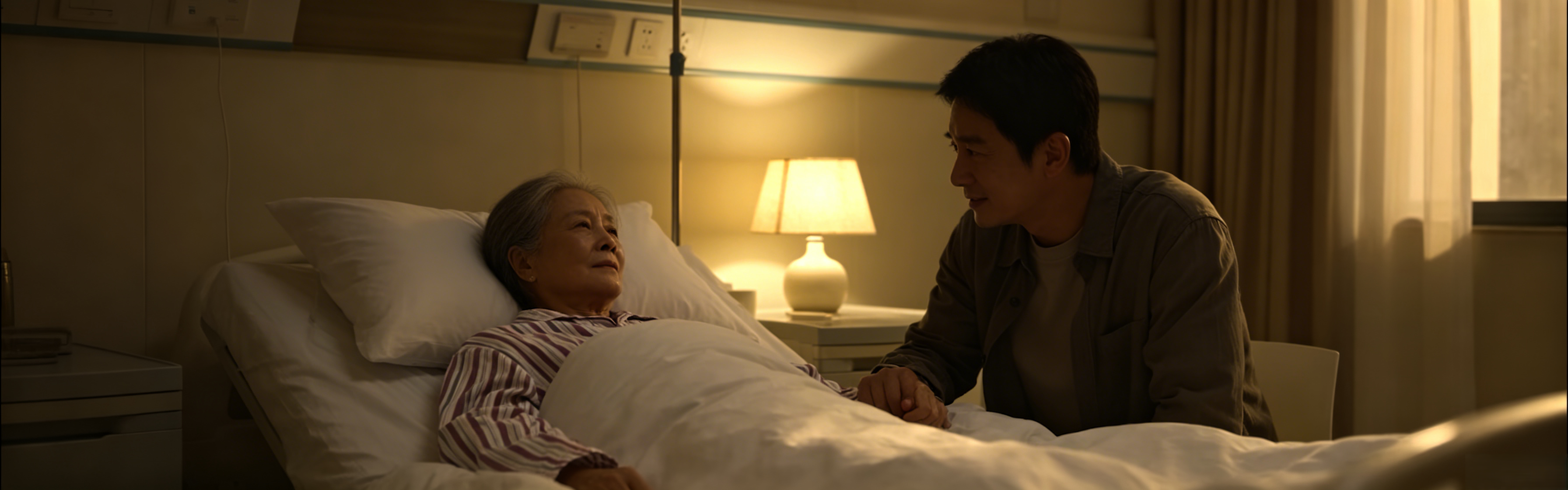 J · Cancer treatment / recovery
Long-term anxiety during treatment, sleepless nights, drained of energy
Cancer treatment / recovery patients · Anxiety, insomnia, fatigue (not a cancer treatment)
How many of these sound like you?
- Long-term anxiety and sleepless nights since diagnosis, repeatedly imagining the worst
- Fatigue and a foggy mind ("chemo brain") during chemo/radiation, with poor focus
- Low mood and loss of interest in the outside world, but don't want to add more anti-anxiety or sleep medication
- Poor sleep is affecting daytime function and how well you can keep up with treatment
- Looking for gentle nutritional support for mood and sleep
What Chienomoto can do
Nutritional support for mood and sleep — PS for stress-axis regulation, PQQ for energy metabolism, ferulic acid for antioxidant support — addressing "anxious insomnia, daytime fatigue, brain fog."
Users most often report: sleeping a bit more soundly, having a little more energy during the day, being able to talk with family.
What Chienomoto can't do
It is not an anti-cancer product — it cannot treat, shrink, or control tumors, and cannot replace surgery, chemo/radiation, targeted therapy, immunotherapy, or any other treatment.
Some antioxidant ingredients may interact with certain treatments — always consult your treating oncologist before adding any supplement.
"During those months of chemo I barely slept, my mind full of test results, and I was too exhausted to move during the day. With my oncologist's approval, I added some nutritional support for sleep and mood. What helped most was sleeping more soundly at night and having enough energy during the day to talk with my family. Treatment is my doctor's call — I just wanted to make this stretch a bit more bearable."
※ Important: All treatment and nutrition decisions for cancer patients must follow the treating oncologist's guidance. Some antioxidant nutrients may affect specific chemo/radiation treatments — always consult your doctor before deciding to use it. Chienomoto is a functional food, not used for the prevention, diagnosis, or treatment of any cancer, and cannot replace standard anti-cancer treatment.

Not sure if it's right for your family?
Free consultation, no sales pressure
Describe your situation to us, and based on the scenario, current treatment plan, and your child's or parent's condition, we'll tell you whether Chienomoto could help and what to watch for.