"...The five-star red flag flutters in the wind, how loud the song of victory rings..."
In a WeChat video, an elderly man sings "Ode to the Motherland" along with his son, line by line. His voice isn't loud, but his words are clear and his rhythm is steady, and he gets through the whole song with hardly a stumble. He is 82 this year, with a healthy glow in his face and plenty of spirit. He isn't just humming a couple of lines; he has remembered long stretches of lyrics and pronounces them clearly. The one who shared the video is the man's son, Mr. L.

"In all my life, I'd never once heard my father sing, not even hum a few lines," Mr. L said with emotion.
Before this, the father had spent more than five quiet years in the world of Alzheimer's disease (commonly known as senile dementia).
Review of the improvement process
| Time point | Key improvements observed |
|---|---|
| Starting point (May 2025) | ·Unsettled sleep: a few nights every month he would be awake in the middle of the night; ·Declining language: he hardly spoke with anyone and ignored people who spoke to him; ·Difficulty walking: he sat for long periods without moving, needed support to walk a few steps, and could not stand up straight; ·Memory: clearly declining |
| Month 1 (June 2025) | ·Clear improvement in language: he used to say hardly a few words in a day, and now he is willing to start conversations with his family; ·Some improvement in walking: he can walk to the bathroom on his own, slowly; ·Sleep: no obvious change yet. |
| Month 3 (August 2025) | ·Mood stable, and some improvement in cognition; ·Improvement leveled off: he spoke a little less than before and slept more, up to 15 or 16 hours a day. Based on this feedback, the dose was adjusted to 1 sachet of No. 4 morning and evening. |
| Month 7 (December 2025) | ·Fourth reorder, with a platform review: "Chienomoto has made a significant improvement in my dad's senile dementia." |
| Month 15 (August 2026) | ·His condition has stayed stable: no better, no worse, and the effect has become relatively steady; ·He has never stopped taking 2 sachets of No. 4 morning and evening, and the family introduced a friend who bought 6 boxes. |
| Month 17 (October 2026) | ·Noticeably more spontaneous interaction with the family; he talks more, learns to sing along with family members every day, and can remember the lyrics of old songs; ·Sleep and mood have remained steady. |

Starting point: he didn't respond when spoken to
Back in May 2025, Dad L had been diagnosed with Alzheimer's disease for more than four years and was in the moderate-to-late stage of dementia. This is how Mr. L described his father's condition at the time:

"A few nights every month he doesn't sleep in the middle of the night; he just sits there, not making a fuss or any noise. Walking has become very hard; he needs support to walk a few steps and can't stand up straight. He hardly speaks, doesn't respond when you talk to him, and his memory has declined badly."
In this condition, while he was already taking memantine and several other medications, a psychiatrist recommended Chienomoto No. 4, suggesting 2 sachets morning and evening. Mr. L trusted the doctor's professional advice and began letting his father try this combined approach.
Month one: the door of language opens again
Language is often the first light to come on in cognitive function. When Dad L became willing to speak again, the family knew that something was slowly coming back.
"He used to say hardly a few words in a day; now he keeps talking with people and is willing to speak." This was Mr. L's most direct impression after his father had taken Chienomoto No. 4 for a month.
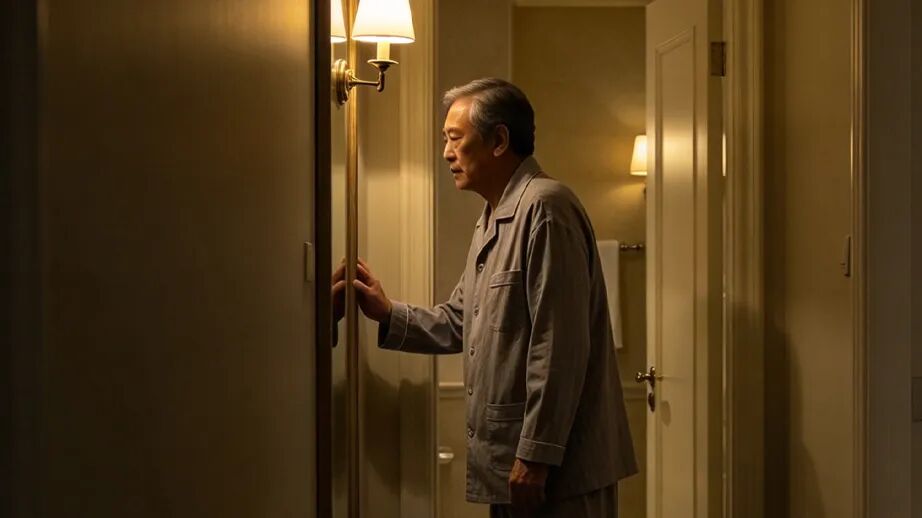
His walking also improved slightly. The route from the bedroom to the living room to the bathroom is the stretch the family knows best. His father used to need someone to support him as he shuffled along step by step; now he can slowly walk to the bathroom by himself. It is very slow, but this stretch of "no support needed" was enough to make the whole family happy for a long time.
His sleep was still somewhat poor, good some nights and bad on others, and he even had several nights in a row when he couldn't fall asleep.
The feeling that the first month gave his son can be summed up in four words he repeated later: "clear improvement."
Dose adjustment: more is not always better
After his father had taken it for 3 months, Mr. L at one point felt there was "not much change" and even grew a little worried: "He sleeps a lot both day and night, sometimes 15 or 16 hours a day."
The customer service team went over the father's background with Mr. L: he was taking psychiatric medications including memantine, sodium oligomannate capsules, galantamine and quetiapine, and one of the side effects of this kind of medication is drowsiness. In addition, the brain's "response" to nutrition is especially noticeable at the beginning, so entering a plateau can feel like "no change" — an illusion created by misreading the curve of brain-function improvement. After a comprehensive assessment, it was suggested to first lower the dose from 2 sachets of No. 4 morning and evening to 1 sachet morning and evening and observe. Later, once the overall improvement stayed steady, the dose went back to 2 sachets morning and evening, and it has stayed there to this day.

This stretch is worth a word: dementia is a chronic condition, and "improvement" has never been a straight line.
It is more like a flight of steps: the early response is obvious, a few months later there may be a plateau, and after an adjustment a new glimmer appears. What family members can do is shift their mindset from "a little better today, so it must be even better tomorrow" to "as long as he is a bit steadier than yesterday and lives with a bit more quality, we've won."
An old song from deep in memory: he sang it
As of October 2026, Dad L has been taking Chienomoto No. 4 for 17 months and has bought 42 boxes in total.
On October 13, Mr. L shared a video with the customer service team: Dad L, following his son line by line, sings along earnestly to "Ode to the Motherland." His face is rosy, his words are clear, and he can even remember long stretches of the lyrics.

"Before Chienomoto, he wouldn't respond when you spoke to him. Now he interacts with the family; the interaction isn't always right or wrong, but at least there is interaction." Mr. L said. "Now I teach him to sing every day. He can't learn new songs, but the old songs from his generation are still in his memory."
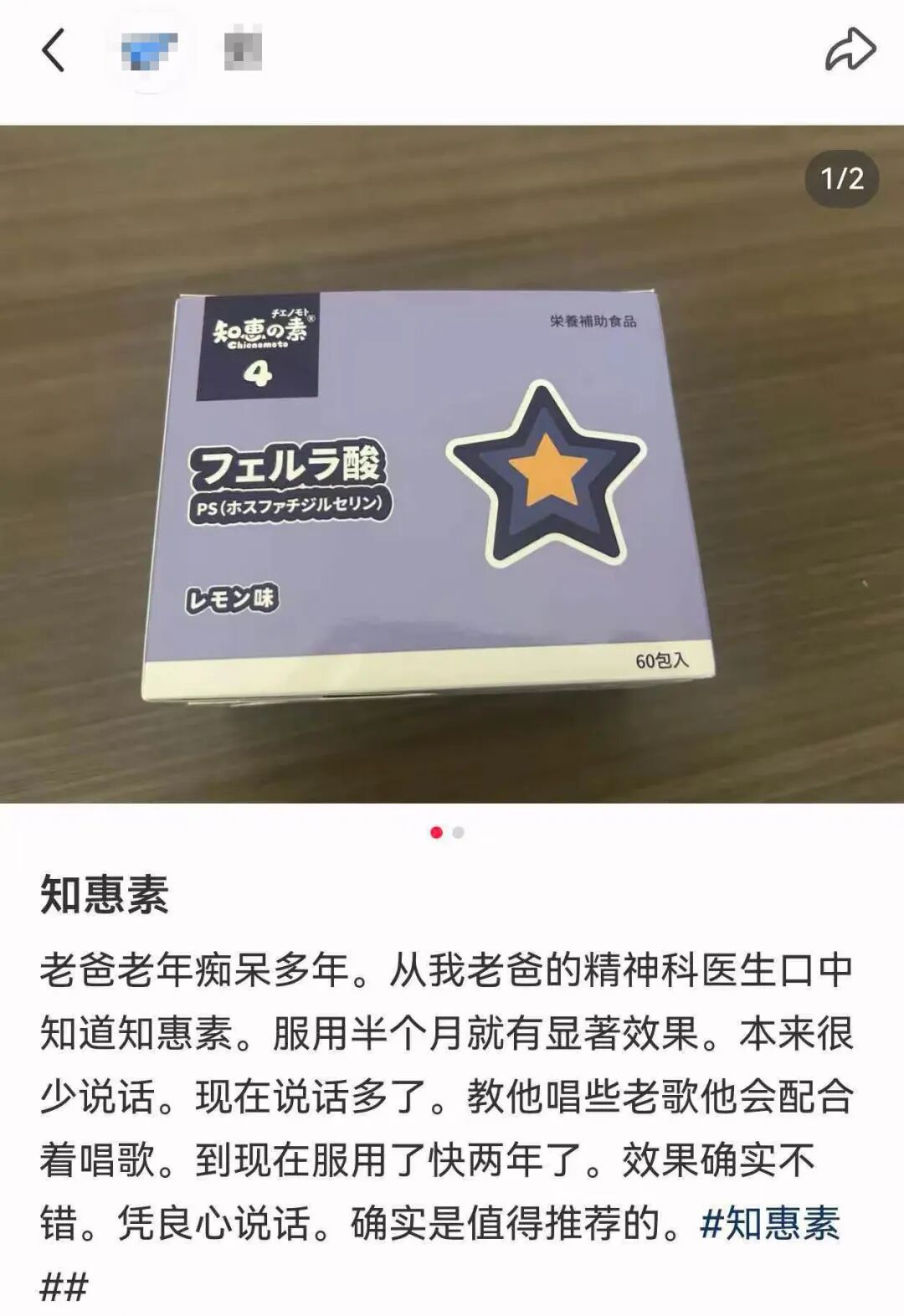
On a social platform, Mr. L also affirmed the effect of Chienomoto: "I learned about Chienomoto from my dad's psychiatrist. After half a month there was a significant effect: he used to speak very little, and now he talks more; when I teach him some old songs, he sings along. He has now been taking it for almost two years, and the effect really is good."
Stability: the hardest win in this long accompaniment
For a man who is 82, has had the illness for 6 years, and takes several psychiatric medications along with blood-pressure medication, the word "stable" is itself a miracle.
In several follow-up calls with the customer service team, Mr. L said that his father has not missed a dose since he started, that his condition is now steadily stable, and that they will keep going as long as he doesn't get worse. He even introduced a friend, who bought 6 boxes at once, and gave some to a friend's elderly parent to try. This is the best recognition and affirmation Chienomoto could ask for!

And for a family, what does "stable" mean?
✪ The elderly person doesn't have to go through a new decline every month;
✪Family members don't have to keep "resetting" their own emotions all the time;
✪The whole family can start living around "the present," rather than around "the next decline."
Written for you, who are also keeping at it
Mr. L's family's 17 months is not a story of a "cure." It is a story about persistence, adjustment, companionship and making peace.
It tells us —
✅Even when the illness has reached the moderate-to-late stage, the brain still responds to outside support.
✅So-called "improvement" is sometimes not recovery, but helping a person, at the age he is, live more like himself.
✅Accompanying someone who is heading deep into the realm of memory is a marathon with no finish line, but you never run it alone.

If you also have such an "old child" at home —
✔ If he is willing to speak, please encourage him to talk;
✔ If he is willing to hum a few lines, please sing the songs of his era with him;
✔ If he is willing to let you support him, please walk slowly alongside him.
An old song, a spontaneous remark, the back of someone slowly walking to the bathroom — to onlookers these moments seem insignificant, but to the family of a person with Alzheimer's disease, each one is a light in the long years.
May every elderly person be gently remembered.