The first time Xiaonan's mother contacted us, her voice held no expectation — only exhaustion.
At the time, her son Xiaonan had just started eighth grade. He'd been diagnosed with ADHD at age 10, with suspected Asperger's as well. For five years, they'd tried several different prescription medications and other products, had cranial-base massage done, and gone for psychological counseling — none of it showed much effect. What broke her down even more was that Xiaonan would say, at the slightest thing, that he "didn't want to live."
Why isn't my child normal?
On the phone, Xiaonan's mother kept repeating one line: "I can't understand it — why isn't my child normal?"

She wasn't an older mother, the delivery was natural, and the pregnancy was completely normal throughout. But her son was just different — when his emotions flared up he'd throw things, shout, and slam doors; he'd clash with classmates at school, and homework would drag on until midnight at home. He couldn't keep up in class, and his grades were a mess; the more she focused on his scores, the more he resisted. During that period, she felt she was nearly losing her mind.
As long as there was a bit of hope, worth trying even if it's expensive
In January 2025, Xiaonan's mother saw in a support group for parents facing similar struggles that another family had tried Chienomoto with fairly good results. After checking with a doctor, she decided to give it a try for her son too. "As long as there was a bit of hope, I figured it was worth trying even if it was expensive," she said. From that day on, Xiaonan began taking Chienomoto No. 2, two packets in the morning and two in the evening.
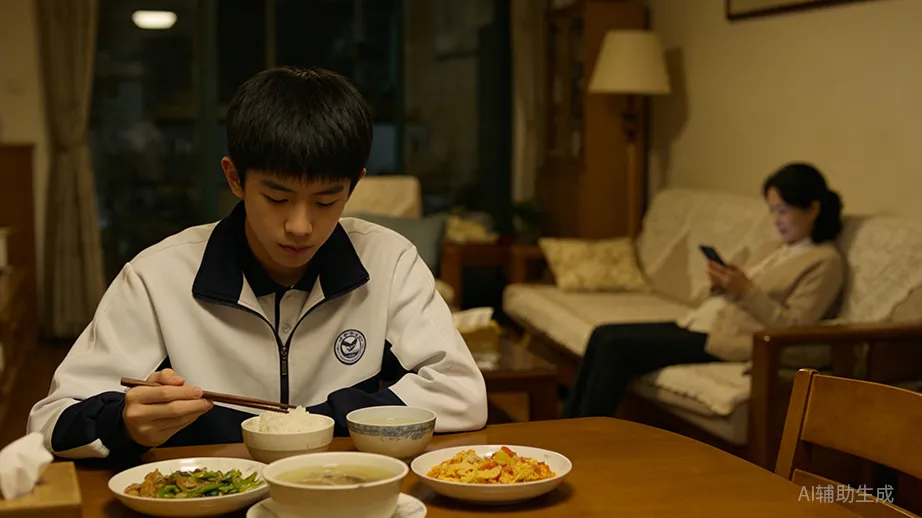
A little over a month later, changes came — his mood grew somewhat calmer, and his sleep was fairly good. But his focus still hadn't improved much; he'd zone out in class and drag his feet on homework. After about four months, during a routine follow-up, our customer service team suggested — based on his condition — trying a 3+2 combination, switching to two packets of No. 3 in the morning and two of No. 2 in the evening.
The hardest stretch
In September 2025, Xiaonan began to backslide — his temper suddenly became especially volatile, and the smallest thing could set him off:
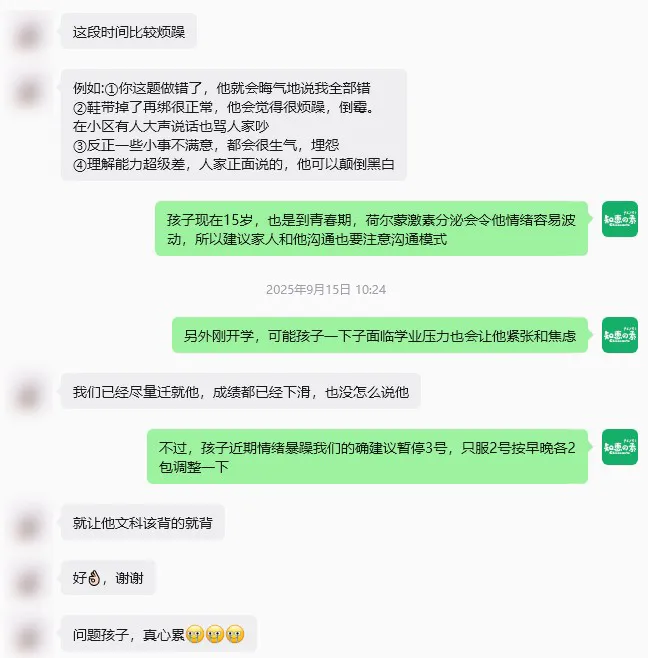
His mother sent us a message on WeChat — you could feel how close to breaking she was, even through the screen: "We've already been giving in to him as much as we can. His grades have already dropped, and we barely say anything to him about it. A 'problem child' — I'm genuinely exhausted!!!"

While reassuring his mother, we suggested adjusting how she communicated with him, and pausing No. 3 for the time being — resuming and readjusting once his mood had stabilized.
For her son's sake, she'd hold on
In February 2026, Xiaonan restarted the 3+2 combination. During a follow-up call, his mother said something I've kept with me ever since: "I just kept giving it to him, holding on to the hope that he'd get better. Honestly, it's not cheap, and there's real pressure — but for him to improve, I have to keep holding on."

That word — "holding on" — is a true picture of what so many families raising children with special needs are living through.
A breath she could finally let out
In late April 2026, Xiaonan's mother left a review in our shop:
Moods have stabilized — irritability, temper outbursts, crying and fussing, and being easily set off have all noticeably decreased; he no longer flares up over small things.
Sleep has improved — he falls asleep faster, doesn't toss and turn as much at night, has fewer dreams, isn't groggy in the morning, and doesn't fuss when waking up.
Focus has shown early improvement — he can sit still a bit better, fidgets less, and no longer zones out or looks around constantly.

In a follow-up that same month, she said something that moved me even more: "He hasn't had thoughts of self-harm lately." Behind that one sentence lie who knows how many sleepless, fearful nights for a mother.
What truly changed wasn't only her son — it was his mother too
Over this past year and more, it wasn't only Xiaonan who changed — his mother did too. At the start, what mattered most to her was his academic performance — what score he got, what rank he placed. Now, what she tells me most often is "how his mood was today" and "how he's been sleeping lately."

Her expectations for her son have changed — she no longer fixates on grades, and pays more attention to whether his overall state is stable. Sometimes, a parent's own change is where a child's greatest room for progress lies.
On the matter of "slow"
Xiaonan wasn't the kind of child who shows results after just one box. From January 2025 to April 2026 — a full one year and four months — there were setbacks along the way too. Looking only at the short term, they might have given up long ago. But his mother chose one word: wait.
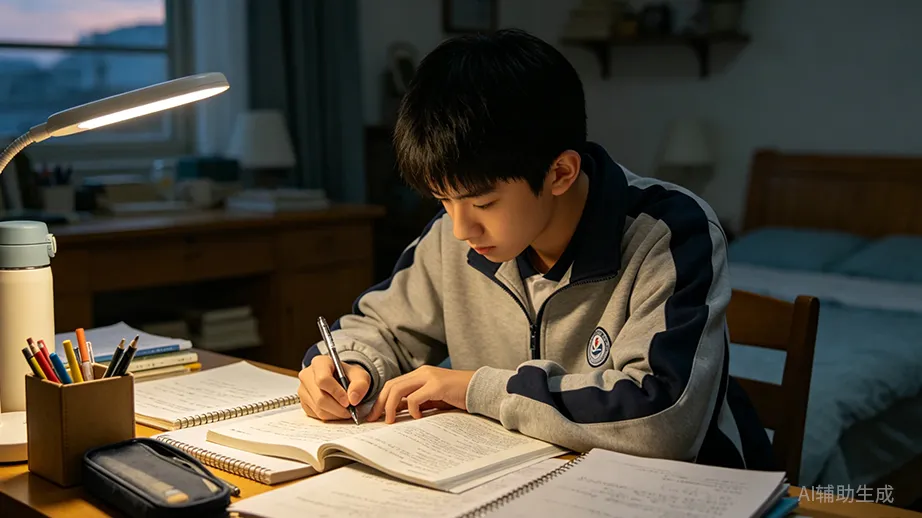
Waiting for his moods to gradually settle, for his sleep to gradually get better, for his focus to gradually improve. Not waiting for a miracle — waiting for time to do its work. If you're going through similar days yourself, we hope Xiaonan's story can give you a little confidence: some changes haven't failed to happen — they're just still on their way.