In September 2024, we wrote about Xiao Nuo (a pseudonym): a story of language development that went from "echoing others" to being named "Most Improved" at kindergarten. Now, more than a year and a half after that article was published, let's look at how Xiao Nuo is doing.
I. Timeline
Time
The child's status / his mother's feedback
October 2023
Age 3, slow language development, liked to echo what others said, didn't speak up much on his own. On the doctor's recommendation, his mother started trying Chienomoto No. 2.
After about 3 weeks
His mother's feedback: big progress in speech — he could now interact and converse; he used to just parrot phrases back, but his language comprehension had clearly improved.
November 2023
His social interaction improved a lot, and he could also sit still in class; but his attention still wasn't great — in activity classes he sometimes didn't follow the teacher's instructions and would run off to play.
September 2024
Published our first article, "From 'Echoing Others' to Most Improved," recording the first stage of change.
March 2025
He'd been taking it for over a year by then. His mother reported improvement across the board: he used to have trouble falling asleep, now his naps come quickly; his moods are relatively stable; he can express his needs normally in speech, though he's still a bit behind children his age.
July–September 2025
He started going to bed late, losing focus in class during the day, and drifting off easily while listening; based on his sleep and daytime state, our customer service team helped adjust his regimen.
April–May 2026
His mother left several reviews in a row: his language ability had clearly improved, he could switch freely between Cantonese and Mandarin, his moods were more stable, and his focus was better too.
June 2026
His mother added: he's now five and a half, his speech is fine, and he's very focused on things that interest him, like writing, drawing, and building train tracks; he still drifts off easily when listening in class, and his sleep has been a bit late recently.
II. The earliest change: from "echoing others" to being able to hold a conversation
What worried his mother most at first was that his language development was a little slow. At age 3, he liked to imitate what adults said — what we often call "echolalia" or "parroting" — but genuinely using his own words to express needs and interact with family still didn't come naturally.

In October 2023, after taking him to the hospital, his mother started trying Chienomoto No. 2. Three weeks in, she gave her first piece of feedback: his language ability had improved a great deal, and he could now interact and converse; the echoing that used to be so obvious had eased, and his language comprehension had clearly risen, with the parroting behavior much reduced. In September 2024, we published the article "From 'Echoing Others' to Most Improved," giving a stage-by-stage summary of how Xiao Nuo had developed.
III. Progress wasn't a straight line up: focus and sleep had their ups and downs along the way too
By 2025, his mother continued to report overall improvement: his speech had gotten better, his moods were relatively stable, and communication was easier too. But she was also candid that although his speech had progressed, there was still a gap compared with children his age.

From July to September 2025, he again started going to bed late, losing focus in class during the day, and drifting off easily while listening. His mother described it in detail: he could sit and play with toys or build with blocks for over half an hour, and he could also recognize pictures and characters just fine — but "listening focus," the kind needed to attend to what other people are saying or to a lesson, was still weak. This is actually a very real side of how many children develop: visual and hands-on focus may develop well first, while listening focus, a sense of rules, and self-control take longer to build.
IV. More than two years on, his mother's latest feedback: clear changes in language, mood, and focus on his interests
By April 2026, his mother wrote in a store review that after continuing to take Chienomoto No. 2, his language ability had clearly improved, his moods were more stable, and his focus was better too.

In a more detailed conversation, she added more specifics: he's now five and a half, his speech is fine, and he switches freely between Cantonese and Mandarin; his moods are fairly stable — not like when he was little and would throw a tantrum on the floor the moment he didn't get his way, he can now be reasoned with. On focus, she didn't oversell it either. She said he sometimes drifts off in class, but when he's doing something he's interested in, he can concentrate very well — like writing, drawing, or building train tracks.
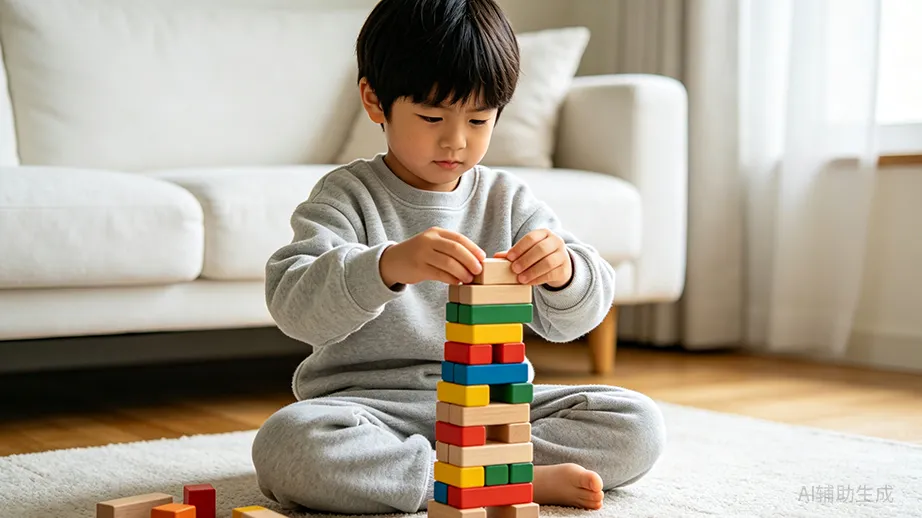
Feedback like this is precious. It isn't a simple "he's much better now" — it shows the child as he really is: progress alongside shortcomings, a side that's grown steadily more stable alongside a side that still needs continued guidance.
V. His mother has started paying attention to her own state too — though this part is still being observed
In June 2026, his mother herself started trying Chienomoto No. 3. In a store review, she mentioned that she'd been under a lot of work pressure lately and her memory had been slipping a bit; after trying No. 3, she felt her mood had stabilized and her memory had improved somewhat. In a later conversation, she also noted she'd only been taking No. 3 for two weeks, and was still observing how it went.

This is an extension of many family stories: it used to be the mother patiently accompanying her child's slow growth — now the mother is also learning to take care of her own state.
Closing thoughts
In 2024, we wrote down Xiao Nuo's story of going from "echoing others" to "Most Improved." In 2026, Xiao Nuo is still growing step by step, patiently accompanied by his mother. He has already come a long way, and there's still ground he needs to keep working to cover. Thank you to Xiao Nuo's mother for her continued feedback over more than two years, and for being willing to let us record these changes. May every child making slow progress be, like Xiao Nuo, met with patience — and be truly seen.