Xiao W first started taking Chienomoto in November 2022, when he was 6. In the early period he mainly used No. 2; after September 2024, based on his situation, this was adjusted to No. 3, which he has continued using up to now. By this follow-up in August 2026, he's almost 10 and in third grade.
This article records the nearly 4 years of growth Ms. W has watched in her son. These changes didn't happen suddenly on any single day — they built up slowly through repeated persistence, adjustment, and companionship.
Timeline of changes
Time
Changes observed
November 2022
6 years old. Starting problems: poor comprehension, delayed language expression, difficulty concentrating, hyperactivity, trouble falling asleep, strong emotional reactions, poor memory.
December 2022
No obvious change; was also attending cognitive-skills classes at the same time.
September 2024
Emotions improved, anxiety eased. Started using No. 3 from this point on.
November 2024
Sleep and overall state better than before, but focus, pronunciation, and memory still had gaps.
February-March 2026
Stopped taking it for two months; focus got worse and no new vocabulary appeared; after restarting, returned to the previous, fairly stable state.
April 2026
After about 3.5 years of taking it, learning ability, memory, and language expression were better than before, though attention was still relatively weak.
June 2026
Follow-up confirmed that his state had gradually stabilized again after restarting.
August 2026
Almost 10, in third grade. Clear progress in language; recent recovery from illness brought some fluctuation in mood and learning state.
1. The initial problems: comprehension, expression, and attention were all a struggle
When Ms. W first reached out, Xiao W was 6 years old, and his main problems were poor comprehension, delayed language expression, difficulty concentrating, hyperactivity, trouble falling asleep, strong emotional reactions, and poor memory.
The model he started on was Chienomoto No. 2. In the early period, his parents reported "no obvious change." But Ms. W didn't give up — she kept taking him to rehabilitation classes and giving him Chienomoto on schedule and at the right dose.
2. A screenshot from Xiaohongshu that recorded the changes Mom saw over time
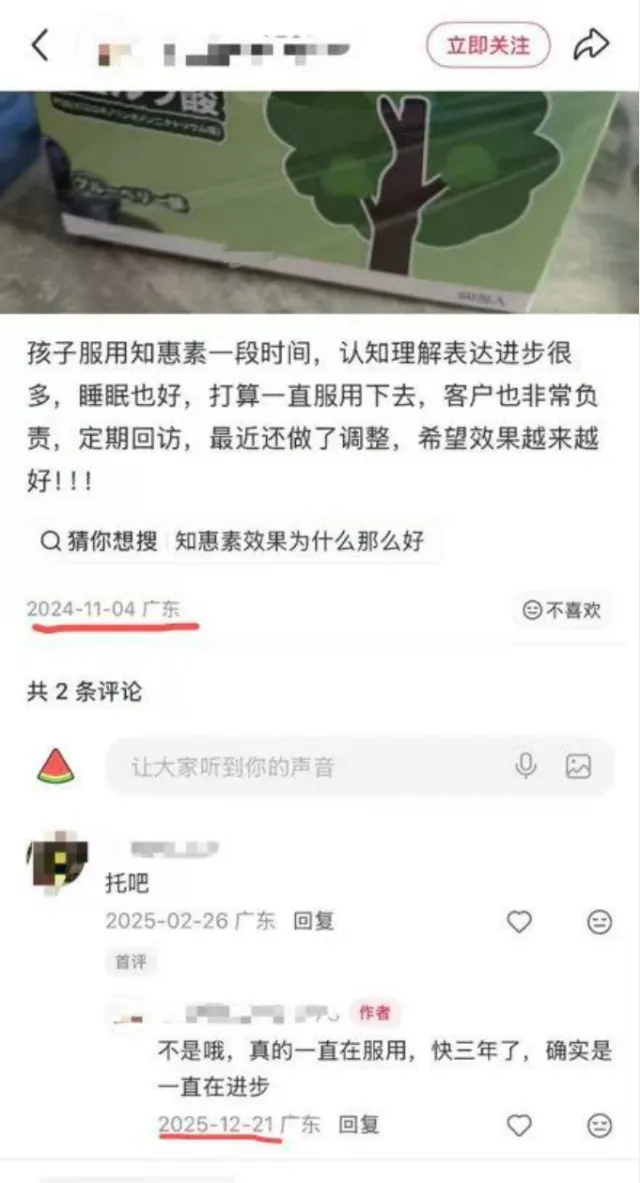
Two years later, Ms. W posted about Xiao W's changes on Xiaohongshu, saying his cognition, comprehension, and expression had improved a great deal. Someone questioned her in the comments: "Paid shill." Ms. W replied: "No, not at all — he's really been taking it the whole time, almost three years now, and he genuinely keeps making progress."
3. After two months without it, Mom saw Xiao W's changes all over again
Some time ago, with more pressure at home, Mom had Xiao W stop taking it for two months. She later specifically told customer service that stopping wasn't because the product didn't suit him, and it wasn't because she didn't believe in it — the family just wanted to adjust things temporarily.
After stopping, Mom noticed that Xiao W's focus got worse, and no new words appeared in his speech. After restarting for about two days, Mom felt he was back to his previous, fairly stable state. She said that when things had stayed stable for a while, it had felt like there wasn't much progress anymore — but once they stopped, she could feel much more clearly just how much he'd actually progressed over the years.
4. The change in language is the part Mom sees most clearly
Xiao W is now almost 10 and in third grade. What Mom values most is his progress in language. She says he now often comes out with five or six new words nearly every day, and a lot of them aren't simple everyday words but fairly abstract ones.

Sometimes, when adults are chatting nearby, he can also pick out the key information, summarize it in his own words, and repeat it back. Mom feels this shows he's not just "talking more" — he's slowly developing the ability to understand, extract, and apply what he hears.
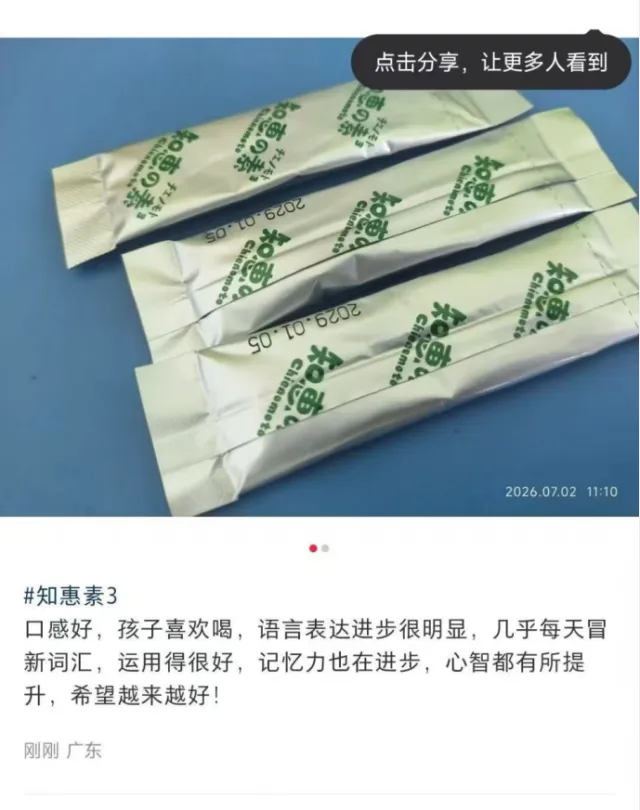
Xiao W takes language classes, where the teacher has taught him various methods. Mom is a full-time caregiver, and after class she also communicates with the teacher and keeps reinforcing things at home. Mom can clearly see that he's able to apply what he's learned to other situations. In a comment, she wrote: "He likes drinking it, his language expression has improved a lot, he comes out with new words almost every day and uses them well, his memory is improving too, and his overall mind has developed as well."
5. Areas that still need more support
Now, Xiao W's sleep is also good, and Mom says he now has a certain ability to apply what he learns to new situations. She hopes that, going forward, he'll be able to express his thoughts and feelings even better, use evaluative language, and gradually build up more general knowledge and humanities background.

In her conversations with Mom, customer service also offered encouragement — noting how much heart Mom has put into her son's growth, and encouraging her to keep giving Xiao W, who struggles with attention, positive support: more companionship, less criticism, more expressions of affection, and less negative language. This kind of support may not produce immediate change, but sustained over the long term, it becomes a real help throughout the child's growth.
In closing
Over these nearly 4 years, Ms. W has seen her son's progress, his setbacks, and the difficulties that still remain. Through one pause in taking it, one illness, and one stretch of fluctuation, she has come to understand anew the challenges her son faces — and has gathered the strength to keep walking forward alongside him.