Focused on neurorehabilitation and cognitive development, Chienomoto appeared simultaneously at two high-profile academic conferences in the Guangdong-Hong Kong-Macao Greater Bay Area, supporting lifelong cognitive health with a science-based nutrition approach.
In late May 2026, the Greater Bay Area hosted two major medical academic events back to back. The 8th Academic Conference of the Pediatric Rehabilitation Committee of the China Maternal and Child Health Association and the 3rd Cognitive Medicine Academic Conference of the Guangdong Medical Association were held concurrently in Foshan and Guangzhou. Driven by the twin focuses of neurological care and cognitive health, the conferences centered on core areas such as children's neurodevelopment, brain-function care, and the diagnosis and treatment of cognitive disorders, bringing together leading national experts and industry professionals to translate academic exchange into frontier technological innovation and to support the high-quality development of a nationwide brain-health service system through interdisciplinary collaboration.
As public attention to brain health continues to grow, issues such as abnormal neurodevelopment in children and cognitive decline among middle-aged and older adults have become central topics in public health. Pediatric neurodevelopmental conditions — including cerebral palsy, autism spectrum disorder, intellectual disability, and language development delay — are receiving increasing attention, while cognitive disorders such as Alzheimer's disease have gradually become a focus of health management for middle-aged and older adults. Industry data show that China's brain-health-related market continues to grow steadily, with the pediatric rehabilitation segment maintaining an annual growth rate above 13%, and market size surpassing RMB 87.6 billion in 2024.
The "Healthy China 2030" strategy explicitly calls for strengthening early childhood development services and promoting early screening, early diagnosis, and early intervention for neurodevelopmental disorders in children aged 0–6. Pediatric neurology draws on the brain's strong neuroplasticity during growth to focus on nervous-system care, behavioral guidance, and cognitive enhancement, while cognitive medicine studies changes in cognitive function across the full lifespan, focusing on the mechanisms and treatment of Alzheimer's disease and other cognitive disorders to provide theoretical support for brain-health prevention across the entire population. The convergence of these two fields is driving China's brain-health services from an "experience-based" model toward one that is "precise and intelligent."
Foshan Venue | Deepening Children's Brain Health, Empowering Neurodevelopment and Behavioral-Cognitive Growth
From May 22 to 25, the 8th Academic Conference of the Pediatric Rehabilitation Committee of the China Maternal and Child Health Association, held alongside a training program on new technologies and advances in pediatric rehabilitation, took place in Foshan under the theme "Precision Rehabilitation, Smart Future, Technology-Led, Empowering Children's Health." As a nationally accredited continuing medical education program, it drew more than a thousand professionals from maternal and child health, medical, rehabilitation, and special-education fields nationwide.
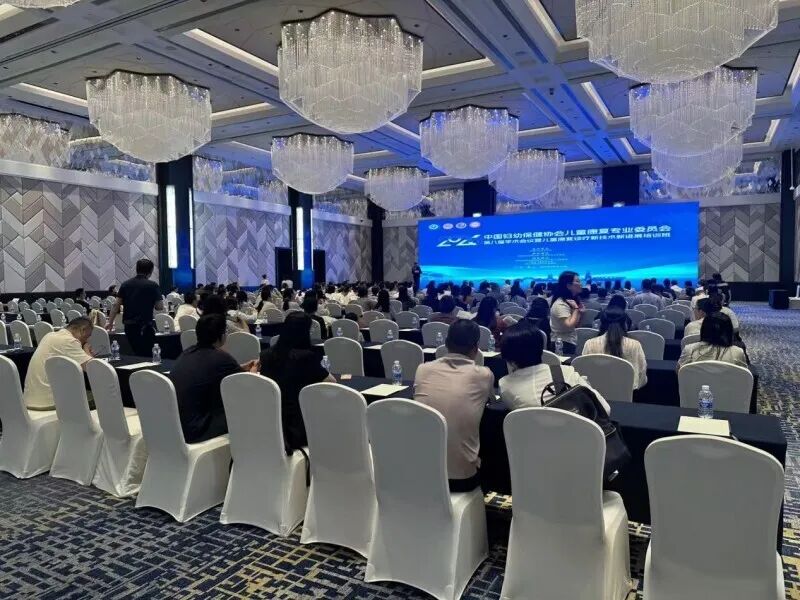
The conference held in-depth discussions on hot topics including neurodevelopmental disorders, motor-function care, critical-care health management, and intervention for neuromuscular conditions, inviting leading domestic experts to deliver dedicated lectures covering frontier research in children's brain health, applications of traditional physical therapy, AI-enabled technologies, advances in neuroimaging, and interventions for neurodevelopment-related conditions.
The conference also featured two dedicated forums on neurodevelopmental disorders and comprehensive children's health management, along with a closed-door seminar on the multi-center GDD study, focusing on innovative technologies and clinical applications such as brain-computer interfaces, near-infrared brain-function imaging, and non-invasive neuromodulation — advancing the deep integration of artificial intelligence, brain science, and children's health management. Attendees who completed the training assessment received nationally accredited continuing medical education credits, providing an authoritative and efficient platform for talent development and technology dissemination in children's brain health.
Chienomoto set up a dedicated exhibition and consultation area at the conference, engaging in in-depth exchanges with attending physicians, therapists, and institution leaders. Addressing common concerns such as delayed cognitive development, emotional volatility, poor sleep quality, and insufficient focus in children, the product centers on natural ingredients — rice bran extract (ferulic acid), phosphatidylserine (PS), and Angelica dahurica extract — to help improve cerebral blood flow, stabilize neural state, and enhance focus and cognitive efficiency, comprehensively supporting healthy neurological development and improving daily behavior to build a strong neurological foundation for children's growth.
Guangzhou Venue | Focused on Cognitive Medicine, Confronting Alzheimer's Disease and Other Cognitive Disorders
Held concurrently, the 3rd Cognitive Medicine Academic Conference of the Guangdong Medical Association focused on basic research and clinical translation in cognitive disorders, covering all age groups, with in-depth discussion particularly on Alzheimer's disease (AD), providing theoretical support and technical complementarity for brain-health management across the population.
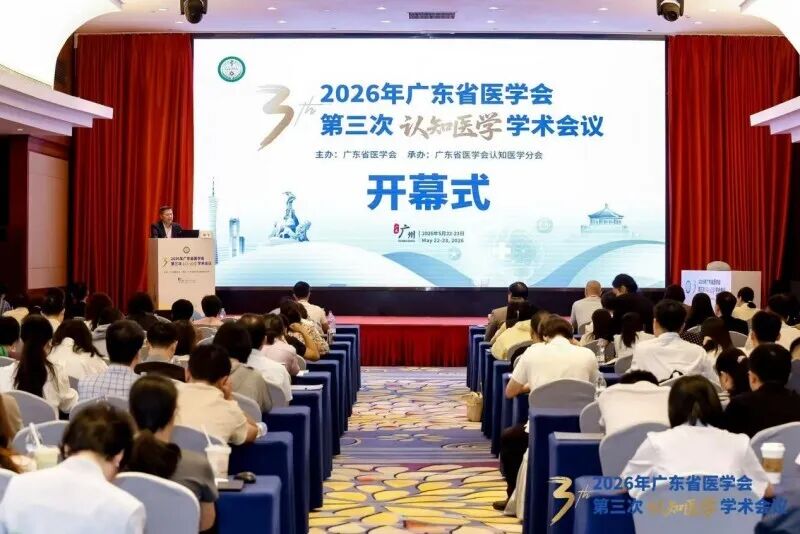
The conference featured plenary sessions, a basic-to-translational research forum, and a case competition, with exchanges on topics including precision diagnosis of Alzheimer's disease, cerebral small vessel disease, vascular cognitive impairment, hereditary neurological disorders, and the neural mechanisms of addiction. Experts shared frontier findings on biomarker testing, peripheral mechanism research, and pathogenesis analysis, using a "theory plus practice" approach to strengthen practitioners' ability to identify, diagnose, and intervene early across various cognitive disorders — reinforcing the regional foundation for cognitive-medicine diagnosis and treatment.
The two conferences were closely timed, complementary in focus, and aligned in goals, together forming a complete academic exchange landscape covering children's neurodevelopment, lifelong brain-function care, cognitive-disorder diagnosis and treatment, and brain science research. The Foshan conference focused on neurological and cognitive development during childhood, advancing the on-the-ground adoption of new health-management technologies and approaches; the Guangzhou conference focused on cognitive medicine, tackling challenges such as Alzheimer's disease in the middle-aged and older population, and reinforcing the theoretical and technical foundation for neurological disease diagnosis and treatment. Together, the two conferences strengthened the interdisciplinary integration of children's neurological health and lifelong cognitive medicine, and provided an important opportunity for professionals nationwide to learn, exchange, and innovate collaboratively.
Cognitive ability is a core capability spanning a person's entire life, shaping learning, socialization, behavior, and quality of life. Chienomoto also appeared at the Guangzhou venue, showcasing to attending experts its application value in improving focus, stabilizing mood, optimizing sleep, maintaining brain function, and slowing cognitive decline. By continuously providing nutritional support for brain metabolism and neural function, it lays a solid physiological foundation for brain-health management across all age groups, earning broad recognition from experts on-site across neurology, geriatrics, child healthcare, and rehabilitation.

Whole-Life Protection | Chienomoto as a Gentle Partner in Brain Health for Every Age
At both conferences, Chienomoto consistently participated as an academic collaborator and clinical supporter. The brand is clearly positioned as a professional nutritional support solution that complements formal diagnosis, treatment, and health intervention — without exaggerating its effects or replacing medical care. The product focuses on real-world needs such as emotional stability, better sleep, improved focus, and optimized cognitive state, tailored to the health needs of different age groups.
For the growth-stage population, Chienomoto offers age- and stage-specific product plans covering children and adolescents aged 1–17, adapted to the neurological and cognitive care needs of different developmental stages. Building on its mature nutritional formulas, it also extends support to adults and middle-aged and older populations, forming a whole-life brain-nutrition support system that addresses needs from childhood development, through adult cognitive demands, to cognitive protection in later life.
Many attending experts noted that, amid the rapid development of AI-powered brain-health applications, neuromodulation, and precision assessment technologies, safe, gentle, and sustainable brain-nutrition support products can effectively improve the continuity of health management and public adherence — an important complement to building a full-cycle, nationwide brain-health service system.
The concurrent holding of the two conferences, with their deep interdisciplinary overlap, marks China's neurological health and cognitive medicine fields moving toward precision, intelligence, and integration. Chienomoto's professional presence at both high-level academic platforms affirms the brand's research strength and clinical value, while also carrying the hopes of families across different ages for better brain health.
Looking ahead, Chienomoto will continue to deepen its focus on brain health across all ages, working alongside maternal and child health institutions, medical teams, and industry experts nationwide to support children's neurodevelopment, protect adult brain health, and guard against cognitive decline in later life through science-based nutrition — bringing sustained, gentle support to everyone's brain health, and contributing to the "Healthy China" initiative.
Stay updated on the latest research — feel free to reach out
View Research Projects Contact Us for Business/Academic Collaboration