Recently, the "Founding Conference of the Developmental-Behavioral Pediatrics Group of the Guizhou Biomedical Engineering Society's Pediatrics Branch and Training Workshop on the Assessment and Intervention of Children's Learning Difficulties," hosted by the Pediatrics Branch of the Guizhou Biomedical Engineering Society and organized by the First People's Hospital of Guiyang, opened with great success. The conference aimed to fill the gap in the developmental-behavioral pediatrics discipline in Guizhou Province, build a high-level platform for academic exchange, and advance the standardized development of assessment and intervention techniques for children's learning difficulties. Nearly a hundred professionals from pediatrics, child healthcare, rehabilitation, and mental health fields across and beyond the province gathered to explore new pathways for children's healthy development.
A Milestone in Discipline Building, Filling a Provincial Gap
The incidence of developmental-behavioral issues among children and adolescents in Guizhou Province has been rising, creating an increasingly urgent demand for professional services. However, a shortage of specialized talent and an incomplete diagnosis-and-treatment system have constrained the growth of service capacity. Against this backdrop, the Developmental-Behavioral Pediatrics Group of the Guizhou Biomedical Engineering Society's Pediatrics Branch was formally established, marking a key step forward in building the province's developmental-behavioral pediatrics discipline.
In her opening remarks, Conference Chair Professor Shao Xiaoshan stated that, following its establishment, the group will regularly organize academic exchange, technology promotion, and talent development, working to build a bridge connecting advanced ideas and techniques from within and beyond the province, and to advance the standardization and professionalization of developmental-behavioral diagnosis and treatment services in Guizhou to genuinely meet the health needs of children and adolescents. As the host institution, the First People's Hospital of Guiyang will use this conference as an opportunity to continue playing a leading role in the discipline and support the high-quality development of regional children's health services.
Leading Experts Convene, Focused on Core Issues in Learning-Difficulty Diagnosis and Treatment
This two-day training workshop invited experts and scholars from well-known domestic institutions including the Children's Hospital affiliated with Chongqing Medical University, the Children's Hospital affiliated with Xi'an Jiaotong University, Wuhan Children's Hospital, and the National Children's Medical Center (Shanghai Children's Medical Center, affiliated with Shanghai Jiao Tong University School of Medicine), who shared in-depth insights on cutting-edge topics such as diagnosis and intervention for children's learning disorders, auditory assessment, and applications of non-invasive neuromodulation.
The curriculum combined theoretical depth with practical guidance: Professor Xiao Nong presented on "Possible Future Directions for Pediatric Rehabilitation," exploring emerging trends in the discipline; Professor Ai Rong focused on the diagnostic and treatment challenges of epileptic encephalopathy, sharing clinical experience; Professors Chen Yanni, Zhu Hongmin, and others gave dedicated lectures on ADHD diagnosis and treatment, differential diagnosis of ASD, and individualized intervention, offering clinicians standardized diagnostic and treatment frameworks. In addition, content on learning-disorder training strategies, recent advances in growth hormone therapy, and practices in pediatric traditional Chinese medicine provided attendees with multidimensional knowledge.
At the conference, Professor Zhang Yiwen of the National Children's Medical Center (Shanghai Children's Medical Center, affiliated with Shanghai Jiao Tong University School of Medicine) delivered a dedicated presentation titled "Exploring the Learning Bottlenecks of ADHD and Intervention Strategies Through Clinical Cases," and, drawing on clinical practice, highlighted the application value of Chienomoto in the health management of children's developmental and behavioral conditions — offering attending experts a new perspective that combines nutritional intervention with clinical diagnosis and treatment.
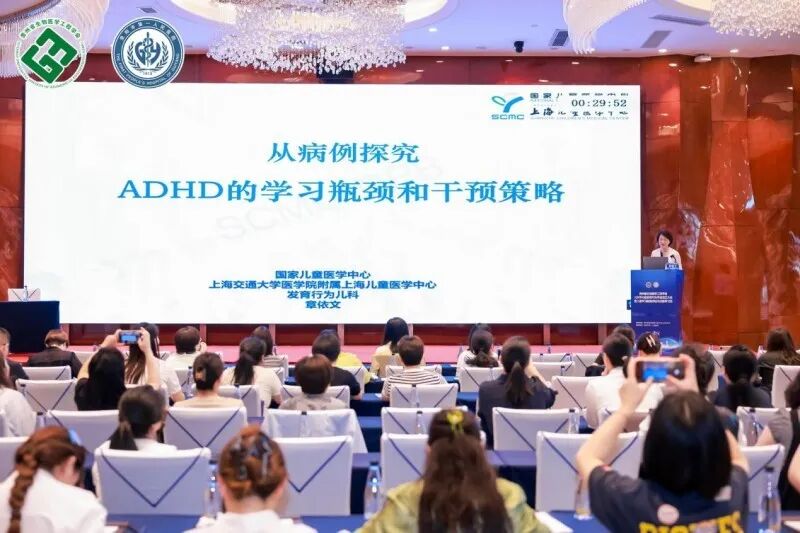
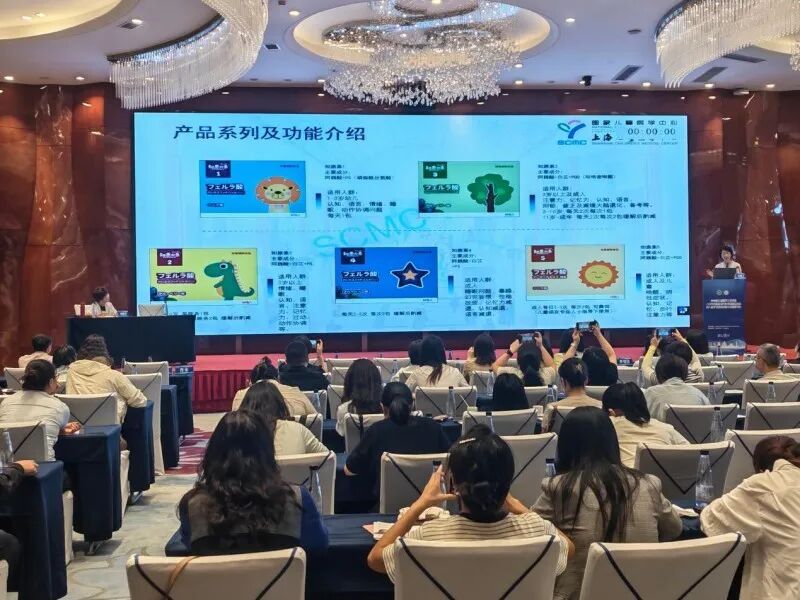
Professor Zhang noted in her presentation that the causes of children's learning difficulties are complex — ADHD, developmental delay, and related conditions are often accompanied by inattention and insufficient cognitive function, and nutritional status is one of the key factors influencing children's brain development and learning ability. Drawing on clinical case data, she explained in detail Chienomoto's product design philosophy, core ingredients, and mechanism of action: "Chienomoto's formula scientifically combines four core nutrients — ferulic acid, Angelica dahurica extract, PQQ, and phosphatidylserine — working synergistically across three targets: anti-inflammation, energy, and neural networks. This provides precise nutritional support for children's brain development, helps improve attention, memory, and other cognitive functions, and offers important nutritional support for the comprehensive intervention of children with learning difficulties. Based on years of clinical follow-up, the '3 in the morning, 2 at night' combined regimen is currently the preferred combination for children with ADHD, ASD, or developmental delay accompanied by learning difficulties, and it is also the standardized, practical implementation of multi-target nutritional intervention."
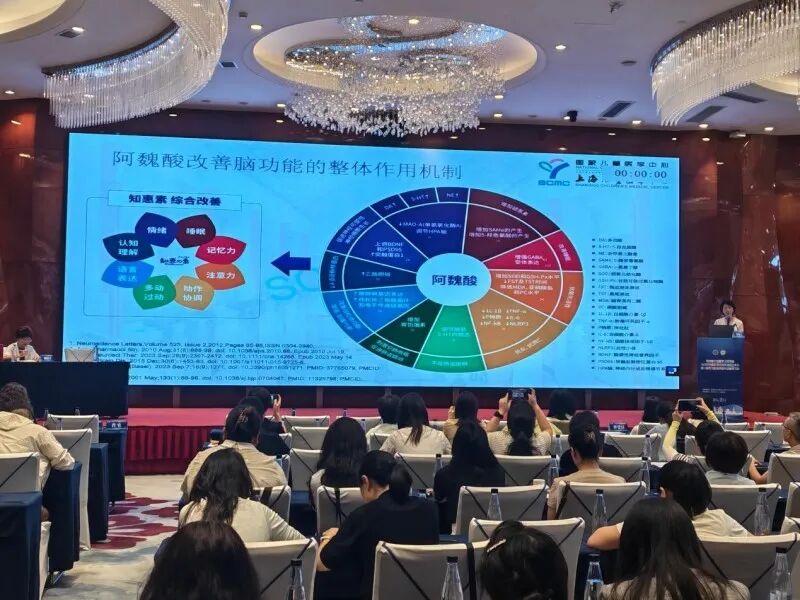
Drawing on clinical application, she recommended the "3 in the morning, 2 at night" regimen: Chienomoto No. 3 before breakfast, and Chienomoto No. 2 before bed. Taking No. 3 in the morning helps sustain brain energy during the day, strengthens classroom focus, and improves cognitive and language-processing efficiency — addressing common learning pain points such as attention lapses in the second half of class, mental fatigue, and increased careless mistakes. Taking No. 2 at night helps ease nighttime anxiety and irritability, shortens time to fall asleep, and reduces frequent night waking, allowing high-quality sleep to support the brain's repair of daytime wear — together forming a day-night closed-loop intervention: energy and focus by day, stable sleep and brain repair by night.
Multidisciplinary Collaboration, Building a New Ecosystem for Children's Health Services
The causes of children's learning difficulties are complex, involving genetic, environmental, psychological, and nutritional dimensions, and require multidisciplinary intervention. The conference featured a dedicated interdisciplinary exchange session, in which experts from pediatrics, rehabilitation, psychology, and special education jointly discussed comprehensive management models for children's learning difficulties, emphasizing the importance of early screening, precise assessment, and individualized intervention.
Professor Li Yingjie of the First People's Hospital of Guiyang stated that intervening in children's learning difficulties is a systemic undertaking — beyond professional diagnosis and training, family support, nutritional management, and behavioral guidance are equally essential. The Chienomoto clinical case shared by Professor Zhang Yiwen offered clinicians a practical reference for nutritional intervention, and also helped promote the broader adoption of an integrated "diagnosis-and-treatment plus nutrition" intervention model.
The conference not only established a high-level platform for academic exchange, but also conveyed a "full-cycle, multidimensional" philosophy of children's health management, providing clear direction for future clinical work. Going forward, as the Developmental-Behavioral Pediatrics Group continues its work and as professional products such as Chienomoto see wider clinical application, Guizhou Province will gradually build a children's developmental-behavioral health service system covering the full continuum of screening, assessment, intervention, and follow-up — bringing scientific, standardized support to more children affected by learning difficulties.
The three-day conference will continue with dedicated seminars, case-sharing sessions, and hands-on training, further advancing technical exchange and the translation of research achievements in children's developmental-behavioral health, and helping to bring Guizhou's children's health initiatives to a new level.
Stay updated on the latest research — feel free to reach out
View Research Projects Contact Us for Business/Academic Collaboration